
Root Canal Treatment – Moses Lake, WA
Relieve Your Pain and Save Your Tooth!
Do you feel an immediate sense of dread when you hear the words “root canal”? Since this remains one of the most feared dental treatments, you’re not alone. There is good news, though: the procedure is virtually painless. In fact, Dr. Nick Smith and our compassionate team will go above and beyond to ensure the process of alleviating any discomfort you’re feeling, eliminating the infection, and restoring your healthy smile is as smooth and streamlined as possible.

Why Choose Moses Lake Family Dentistry for Root Canal Treatment?

Do You Need Root Canal Treatment?
There are a few abnormal symptoms we recommend keeping an eye out for between visits, including:
- Dull, consistent throbbing
- A sharp, stabbing pain when you bite down
- Persistent sensitivity
- A pimple-like bump on your gums
- Dark discoloration on the tooth in question
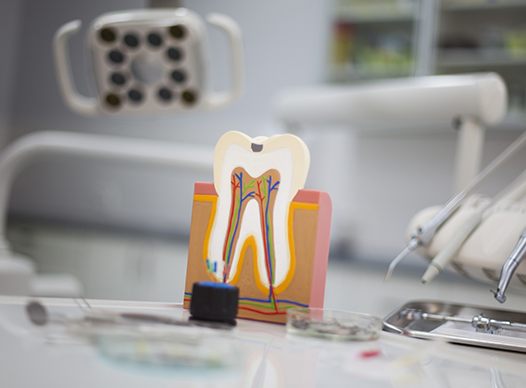
In many cases, symptoms like these surface because the pulp (the innermost layer of the tooth) becomes infected by bacteria. If that’s the case for you, then the soft tissue, which houses the tooth’s nerves and blood vessels, needs to be removed and cleaned out.
The Root Canal Process
Here’s a brief overview of what to expect if you and Dr. Nick Smith determine that root canal treatment is the best course of action:
- He will administer a local anesthetic to relieve your pain and numb the area.
- He will remove the infected or damaged structure and remove the pulp from your tooth.
- Then, we will make sure the inner chamber is clean and seal it from future infection.
- Finally, we’ll place either a tooth-colored filling or a temporary dental crown to restore your tooth to full function and beauty.
- Once your permanent crown is ready, you’ll return to our office so that we can bond it into place.

The Benefits of Getting a Root Canal
If you still cringe when you hear “root canal,” then it’s important to remember that this procedure is designed to salvage your tooth after severe decay or damage and eliminate any pain you may be experiencing. In other words, without advanced root canal treatment, your tooth would likely need to be removed completely.
Of course, that’s not the only benefit of this emergency dental treatment. It is also virtually painless, has a high success rate, and restores your healthy smile without drawing unwanted attention to it. Plus, we can add nitrous oxide to your treatment plan if you struggle with dental-related anxiety to ensure you remain calm and comfortable throughout your visit.
Understanding the Cost of Root Canals

Read More
Factors That Can Affect Root Canal Cost

- The location of the tooth: Teeth located farther back in the mouth are harder to reach and treat.
- The anatomy of the tooth: Larger teeth such as the molars and premolars have more complicated anatomy, which makes the treatment process take longer.
- The need for a specialist: It may be necessary to refer a patient to a specialist who uses a different pricing structure in especially complex cases.
- Additional services: If you are receiving nitrous oxide sedation or a dental crown during the treatment, these services will be included on your bill.
Is It Cheaper to Pull My Tooth?
It is always better to preserve a natural tooth if possible, and removing a tooth that can be saved can lead to significant expenses as well as oral and overall health consequences. The loss of a tooth exposes the gum tissue to injury and causes issues like uneven enamel wear and dental drift that can leave the rest of the smile vulnerable to oral infections and further tooth loss. Treating these issues with restorative work and tooth replacement devices can be quite expensive, but a root canal can allow a compromised tooth to remain functional for many years. If Dr. Nick Smith recommends root canal treatment, you can rest assured that it is the best option for your health and pocketbook.

Does Dental Insurance Cover Root Canal Treatment?

Other Options for Making Root Canal Treatment Affordable

Root Canal FAQs
Can I Eat Before My Root Canal Procedure?
It’s normal to wonder whether it’s safe to eat a meal prior to arriving for your scheduled procedure, but the answer can depend somewhat on your unique circumstances. For example, if you are not planning to undergo sedation, it’s often recommended that you have a healthy meal a couple of hours before your scheduled arrival, since your mouth will be numb afterward, which can make it challenging to eat.
However, if you plan to be sedated, you might be asked to fast for a few hours before your procedure to avoid potential nausea that the medication can sometimes cause. Our team will provide pre-operative directions for you to follow based on your circumstances so you know what to expect that day.
Does Getting a Root Canal Hurt?
Many patients assume this treatment will be long and agonizing, but thankfully, that’s not usually the case. Dr. Nick Smith and the rest of our team in Moses Lake know you might be feeling anxious and are here to assure you that we’ll do everything we can to ease your frayed nerves and help you feel calm.
For example, we’ll numb the area with a local anesthetic before starting your procedure to prevent the nerves in your teeth and gums from sending pain signals to your brain. That way, you might feel some pressure changes while we work, but not outright discomfort.
We also offer nitrous oxide (laughing gas) sedation that’s inhaled through a gas mask placed over your nose throughout your treatment. The effects kick in almost as soon as you inhale, and induce a sense of relaxation or euphoria but don’t ‘knock you out’. Then, their impact fades just as quickly once the mask is removed and you stop breathing in the medication.
How Long Does Root Canal Recovery Usually Take?
The length of time it takes your mouth to mend can depend on your circumstances, but most patients can resume their normal activities the day after their appointment. However, if your job requires a lot of manual labor or physical exertion, you might want to take a few days off to give your gums enough time to rest and recover.
You can ease potential swelling and soreness during this period by sticking to softer foods that are easier to eat, like mashed potatoes, applesauce, yogurt, or scrambled eggs. You should also keep your mouth clean by brushing and flossing but take care to be gentle around the recently treated tooth.
How Long Do Root Canals Last?
This procedure is common and also usually quite successful. Typically, you can expect teeth treated with a root canal to continue functioning normally for many years or even for the remainder of your natural life! With that said, some people do experience a repeat infection requiring a secondary root canal.
Following our team’s post-operative instructions can help you recover efficiently while avoiding potential complications that might otherwise arise, thereby preventing the need for another procedure in the future.